Featured
Table of Contents
You undoubtedly integrate your yoga exercise. And among things I liked one of the most about your biography is you claimed that you believe that the trip of trauma recuperation is an awakening of the spiritual heart, which that's simply lovely language. Arielle, I am so incredibly blessed that you are joining me for this fantastic opportunity for everybody to have a conversation about intergenerational injury, which I assume we require to be having even more conversations concerning that.
And Lisa, it's simply great to be back with Know. You and I have actually recognized each other a long time and I truly look onward to where this conversation takes us.
Arielle, it's a true blessing to recognize you. . Thanks. Arielle, bring us right into a little bit about you and your love for this topic. I understand we're mosting likely to talk regarding intergenerational injury, however PTSD belongs to that. Trauma, why has this subject ordered you so much? Yeah, I do not know that I ever recognized that that's where I was mosting likely to land.
Escaping the Burden of Parental Sacrifices
This was the ocean that we were swimming in, and none of us had actually quite put the word trauma on it. And it was via my own therapy, in addition to with the trip of coming to be a psycho therapist, that I began to actually identify my very own patterns. Patterns of where dissociation appeared for me, patterns of where I had relational dynamics with other people that were type of repeating particular components of this.
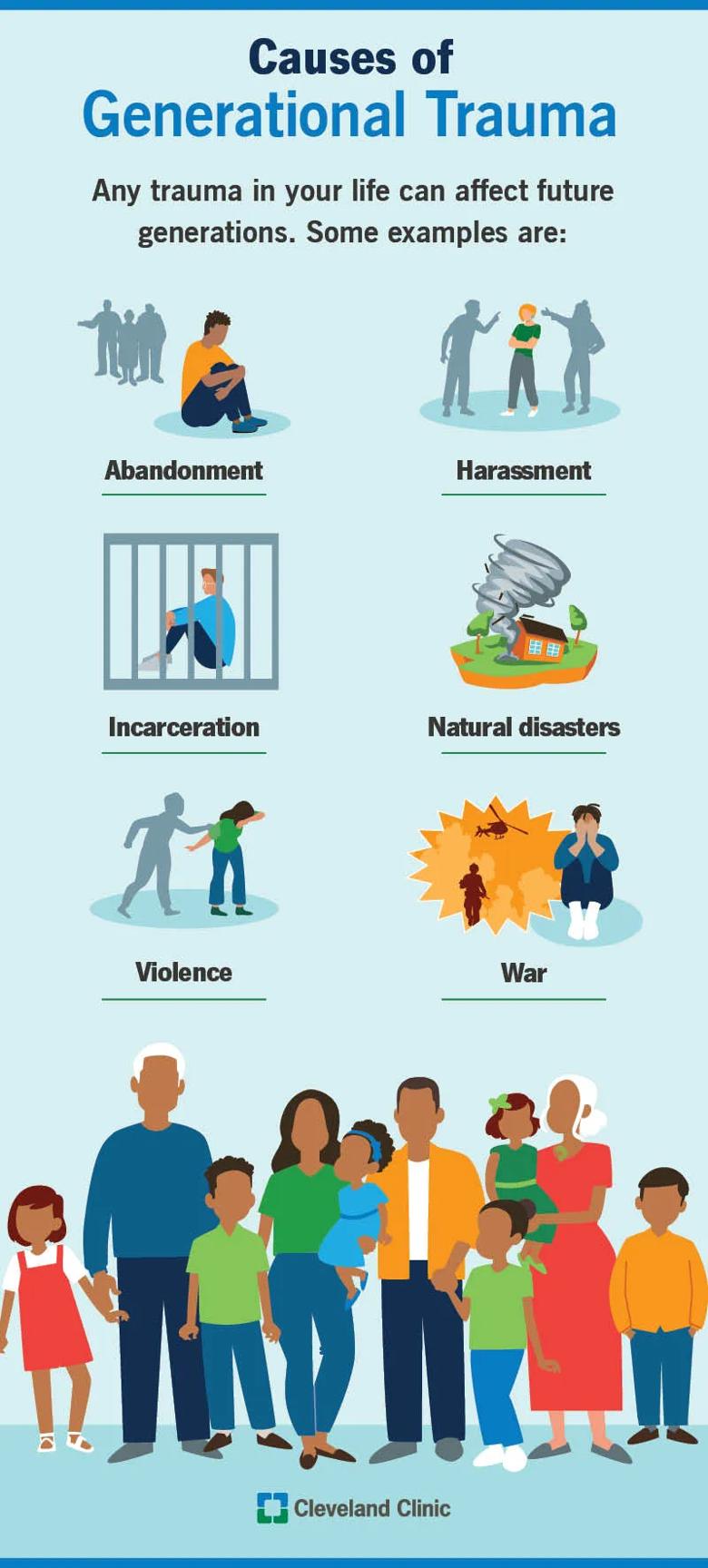
You're repainting an attractive picture, and I love that you're currently introducing this concept that a person can be installed in injury and not also identify it as trauma. Just how would certainly you describe intergenerational injury? This is when the unsolved trauma of one generation gets passed on to the next generation, and it gets passed on with parenting designs, and it obtains passed on through relational experiences and characteristics, however it also can obtain passed on with epigenetics.
Therefore babies can in some cases be birthed with greater level of sensitivities, whether that's through colic or via sensory sensitivities, and likewise reduced birth weight. They can be more difficult to relieve, and it's relatively typical. And so I assume I just desire to kind of immediately state, like, can we pull some of the pity off of this tale.
Do you assume it's feasible for someone to not have some degree of intergenerational trauma in their story? Right. I believe now in the world, we are all lugging something. And I understand for myself that component of my own recovery inspiration was coming to be a moms and dad and intending to safeguard my children from elements that I really felt like I was bring inside of me.
Indicators of Cultural Understanding
Does that mean that it's perfect and that I stopped the river? No, right. They both came right into the globe with really extremely delicate systems and gratefully being somebody in the area was able to safeguard job-related therapy and to function with that sensory sensitivity in them and to get them support too, since that's kind of component of what we can do.
And as you're sharing that, there's some acknowledgement that something's going on and some access to sources, but that's not real for every person. Let's take this now right into the globe of therapy. Exactly how do you begin to conceptualize how to utilize this information in the context of working with our customers? Just how do you wrap your mind around it? I think that part of it is really understanding our customers in that entire context, to ensure that when we're developing what we frequently describe as a case concept or that deep understanding of whether you're collaborating with a youngster, or whether it's with a grown-up or sometimes the parent or the entire household system, that you are comprehending them within that developmental context, within the social context, cultural context, and also because generational context.

I intend to actually provide an instance. It's a kind of powerful one, and I'll leave it in really generic terms to not disclose any identities. However this went to a time when I was doing a great deal of play therapy in my technique, and equally as a type of knowing for our audiences, I had a play treatment method for numerous years, primarily in kid centered play therapy and filial play therapy.
And after my 2nd youngster was birthed and sort of working with he has Dyslexia and some ADHD and these sensory sensitivities, and I stopped my kid technique. I truly needed my youngster energy to be available for them and we'll see what occurs in the future. So it was a sensible choice.
Career Choices and Cultural Approval
And the mommy would certainly typically generate her own journal and simply type of needed that to ground her to document what was showing up for her as she was sitting and being present to her child's play since so much would be stimulated. One of these play themes that the child brings in a style and it returns.
Yet what would certainly happen is that the horse, which was passionately called Nana, would always go and poop in the water trough. And after that the youngsters were attempting to figure out, do I drink from this? Am I not drinking from this? And when I would have conferences with the mommy after these sessions, she would certainly chat concerning what was coming up for her because Nana, her relationship to her mother was quite what she really feels like sort of this toxin in the well.

Latest Posts
Integrating Play Therapy With Systemic Work
Language and Emotional Access in Therapy
The Power of Trauma Therapy for Trauma